A Film-Club Checklist for Reading a Casino Evacuation Scene
Use this film-club checklist for a casino evacuation scene to discuss how music, framing, and pacing shape suspense without mistaking fiction for safety guidance.
The common mistake in a casino evacuation scene is treating its dramatic mood as a verdict on the venue. A film-club checklist for a casino evacuation scene helps viewers examine how the filmmaker builds suspense, while keeping the discussion separate from real-world fire-safety advice.
Focus on craft: how the soundtrack changes, how long the camera stays on a face, and what details the setting contributes. A movie is like a stage set: it can suggest a place convincingly without showing how that place actually operates.
Set a viewing purpose
Choose one storytelling question before watching. Does the sequence make the audience feel tense, disoriented, or close to a particular character? Pick a short passage with a clear change in music, framing, or pace, and agree to discuss what those choices do for the scene.
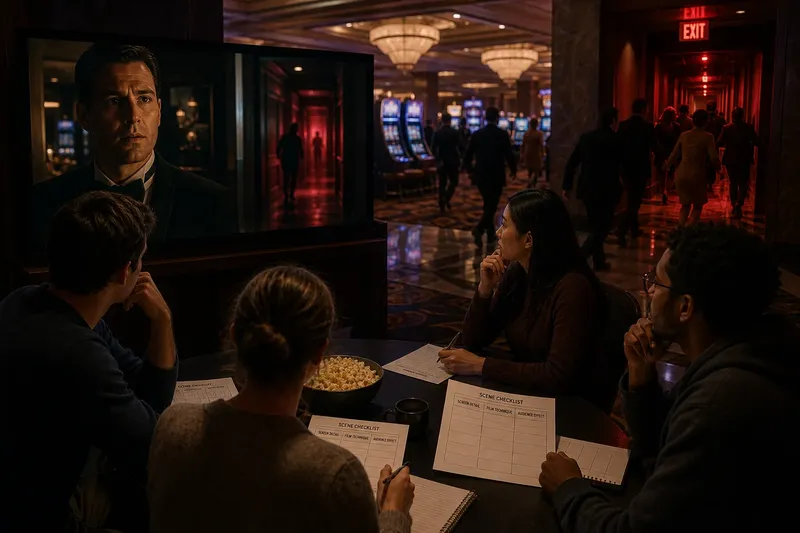
Give each viewer a note sheet with three columns: “screen detail,” “film technique,” and “audience effect.” This keeps the discussion centered on how the movie communicates rather than on whether its fictional response would work in a real casino.
- Screen detail: A visible image, spoken line, or audible sound.
- Film technique: A camera angle, edit, lighting choice, or soundtrack cue.
- Audience effect: A feeling or expectation the scene may create, such as suspense or uncertainty.
Track mood and pace
Watch once without pausing. Note whether the sequence feels fast or slow, then identify the choices that contribute: quick cuts, a lingering close-up, a sudden drop in music, or a repeated shot. Avoid turning a mood into a claim about what a real venue or its staff would do.
On a second viewing, compare sound and image. Music can make an ordinary glance feel ominous; a wide shot can make a character seem small within a large room. These are storytelling effects, not instructions for interpreting actual emergency conditions.
Say you are discussing an invented scene: a casino host stops mid-sentence as low music continues, and the camera holds on a guest’s face before cutting to a dim corridor. The group notes the pause, the sustained music, the close-up, and the cut. It can then discuss how the sequence creates unease without deciding why the host stopped or what the corridor means in real life.
Use a scene checklist
For each item, record what you notice and choose the conclusion that fits. If the detail is absent or unclear, use the alternative rather than filling the gap with an assumption.
- Camera distance: Check whether the shot is a close-up or a wide view. If a face fills the frame, discuss the emphasis on that character; if the room dominates, discuss how the setting shapes the scene.
- Lighting: Check whether the scene uses bright, dim, or contrasting light. If shadows or color changes stand out, discuss their mood effect; if the lighting stays even, avoid claiming that lighting signals a change.
- Music: Check whether music starts, stops, or changes in intensity. If it shifts, describe the mood it suggests; if it remains steady or is absent, look to other choices for the scene’s emotional tone.
- Sound effects: Check whether a sound is clearly connected to something on screen. If its source is visible, discuss how image and sound work together; if not, describe the sound without assigning it a cause.
- Shot duration: Check whether the camera lingers or cuts quickly. If a shot lasts, discuss what the film asks viewers to notice; if shots move rapidly, discuss the pace without treating it as a real-time record.
- Character focus: Check whose face or actions receive attention. If one character dominates, discuss how the scene guides audience sympathy; if focus shifts, compare how the change affects the viewer’s expectations.
What does the scene suggest?
Does tense music signal danger?
It signals a mood the filmmakers want the audience to feel, but does not identify a real hazard. Discuss whether the music creates suspense, urgency, or another response.
Can a close-up explain a character’s motive?
A close-up emphasizes an expression or gesture, but it does not establish why the character acts that way. Treat a proposed motive as an interpretation unless dialogue or other story details support it.
Does dim lighting make a scene realistic?
Dim lighting is a visual choice and may help create a particular atmosphere. It does not establish how a real casino is lit or how a real emergency should be handled.
Why might a film repeat an image?
Repetition can draw attention to a detail or connect the moment to an earlier part of the story. Discuss the effect on the audience rather than treating the repeated image as additional evidence about real events.
Work through a viewing
Imagine an invented scene with these starting details: the music is quiet, the camera shows a host’s face, the host glances toward a doorway, and the shot then moves to a different room. A viewer might work through it this way:
- Write “quiet music” under screen detail and “steady soundtrack” under film technique. Decide that the music does not create a sudden shift in mood by itself.
- Write “close-up of the host” and note that the framing emphasizes the host’s expression. Do not assign a reason to that expression.
- Write “glance toward the doorway” and “cut to another room.” Decide that the edit invites curiosity about the doorway, but does not show what the host does next.
- Describe the audience effect as uncertainty or suspense if that matches the group’s reaction. If viewers feel no suspense, record that response instead of treating one interpretation as correct.
The resulting discussion has a concrete basis: the group can point to the music, the close-up, and the cut, then explain how each might shape the viewing experience. The tradeoff is that some story questions remain open, because the scene does not answer them.
Keep film and safety separate
Close by choosing one screen detail, one film technique, and one audience effect. Read them in that order. If viewers disagree about the effect, keep both responses tied to the same observed choice rather than arguing that the movie demonstrates how a real evacuation should work.
A film-club checklist for a casino evacuation scene is most useful when it sharpens attention to sound, framing, and pacing without turning dramatic shorthand into operational advice. For questions about an actual venue’s fire protection or evacuation arrangements, consult the venue or a qualified fire-safety professional.